Maritime field research
service
Research
sector
Maritime
Year
2023
Context & Background
When most people think of life at sea, they picture rough weather, engine rooms, navigation bridges, and heavy-duty tasks. But few stop to consider the people who keep the crew going day after day — not just physically, but emotionally. Among the unsung heroes of a vessel is the ship’s cook, often referred to as the Chief Steward. Beyond preparing daily meals, they manage inventory, place supply orders, and ensure provisions are delivered to the right port at the right time — all while juggling the unpredictable rhythm of life at sea.
But the story doesn’t end on the vessel. Every item ordered has to be sourced, packed, and delivered by a supplier onshore — often under tight timelines and with fragile stock. These teams navigate their own complexities, from shifting delivery windows and shortages to paper-based tracking systems and rotating roles.
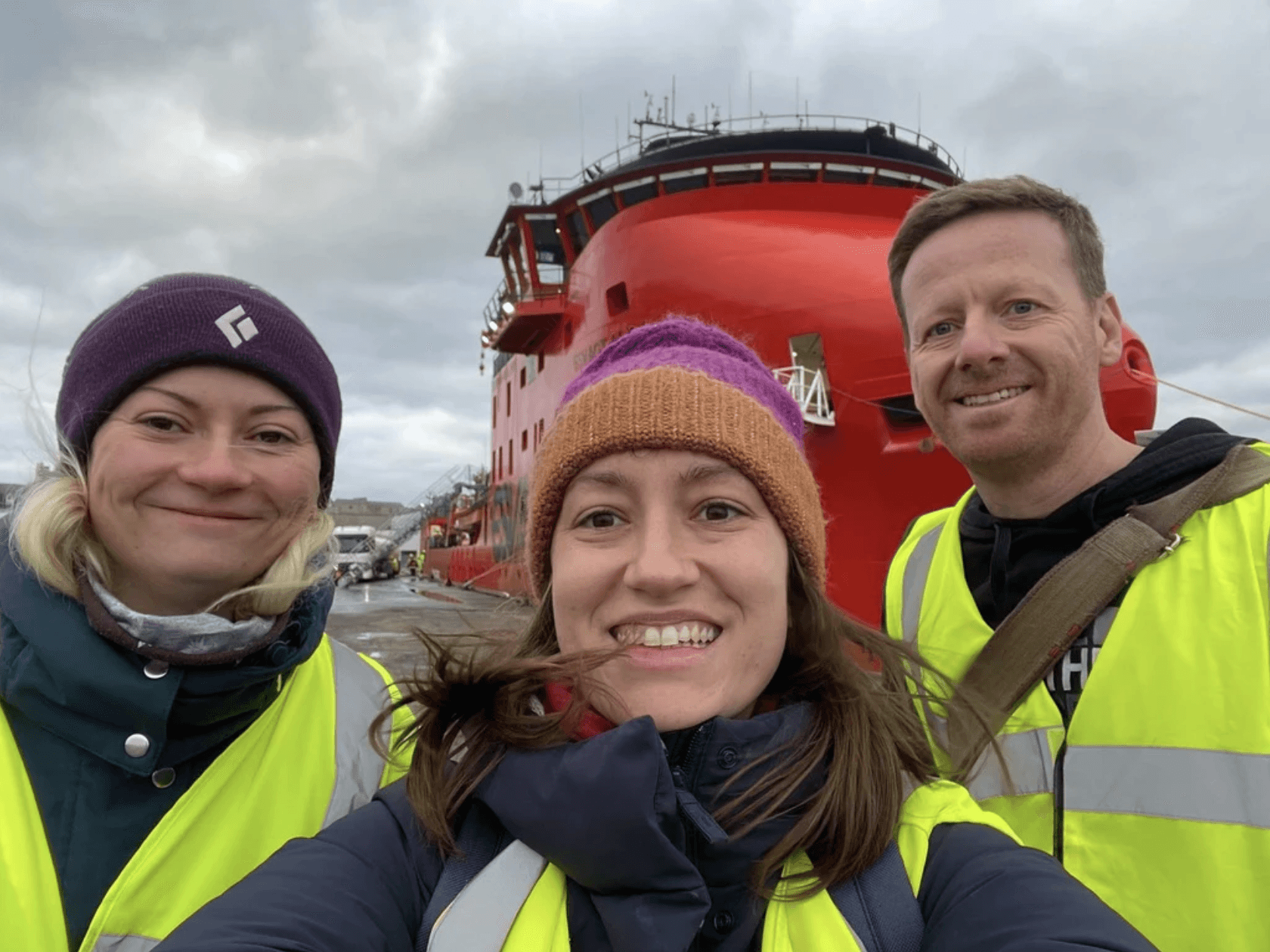
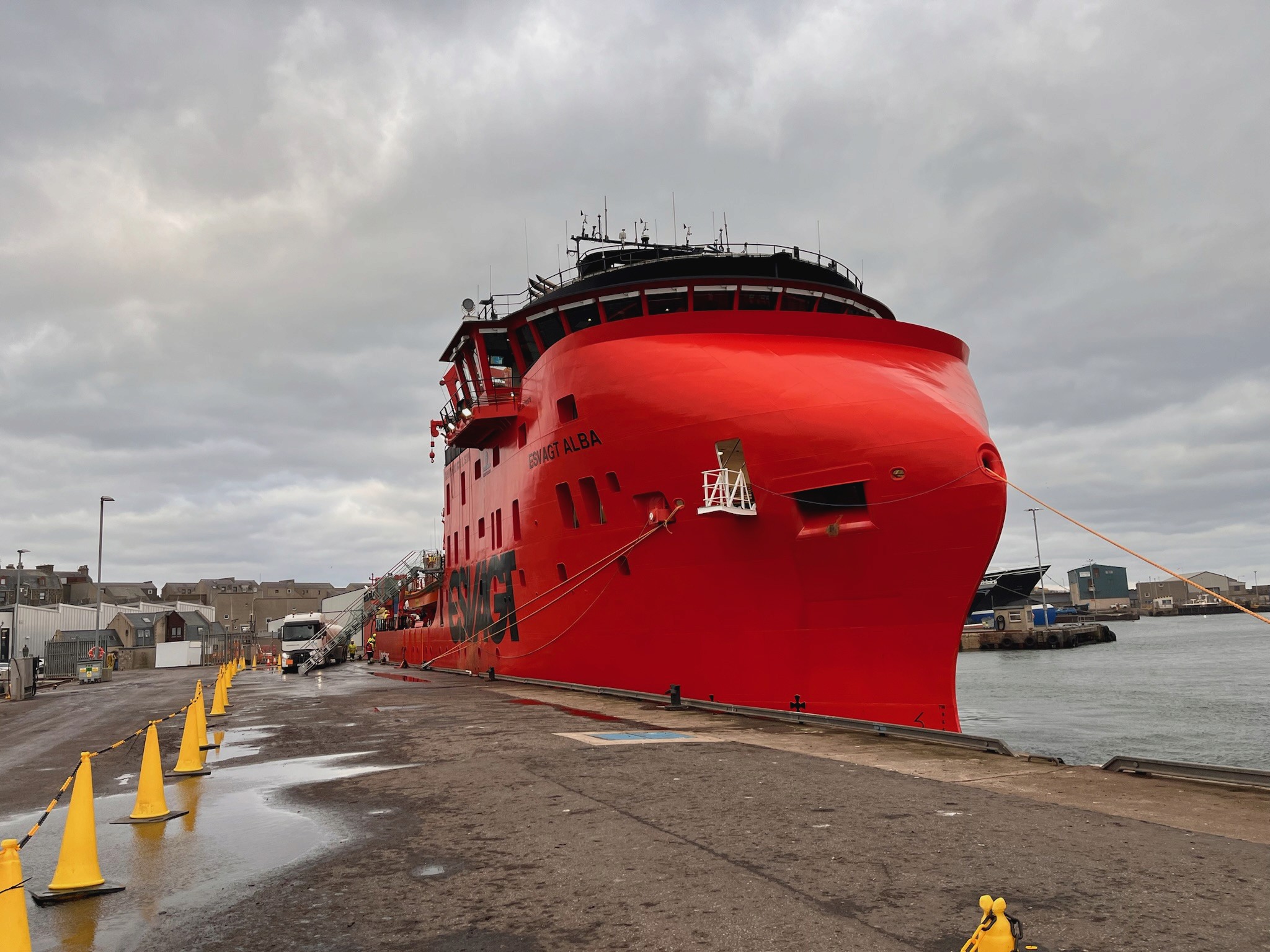
In this project, we set out to understand how digital tools could better support this complex, behind-the-scenes work. Our team traveled to Scotland to meet with a vessel's cook and immerse ourselves in their day-to-day reality. But the journey didn’t stop at sea. We also visited the shore-side suppliers who fulfill these orders — shadowing their warehouse teams through dry storage and freezer facilities to see how incoming orders are received, prepared, and dispatched.
By embedding ourselves at both ends of the supply chain, we were able to evaluate how our provisions e-shop and supplier portal function in real-world conditions — and where they could do more to support the people depending on them. This wasn’t just about designing an e-commerce platform; it was about building a system that respects the unique challenges of maritime logistics, and the people who keep it all running.
Setting up for the discovery
As a small startup, our opportunities for field research were limited — which made each visit all the more important. Whenever we had the chance to step into our users’ world, we made every moment count.
Each research trip was carried out by a team of two designers. One of us led the sessions as moderator, while the other focused on capturing insights — through detailed note-taking, sketches, and observations.
Roughly three weeks before each visit, my design partner and I would begin preparing a comprehensive research plan. This included defining our key focus areas, forming hypotheses, drafting interview questions, and mapping out schedules and logistics. We reviewed the plan thoroughly, ensuring we were aligned and well-versed in every detail. The better our preparation, the more meaningful insights we could bring back to inform design.
During Field Research
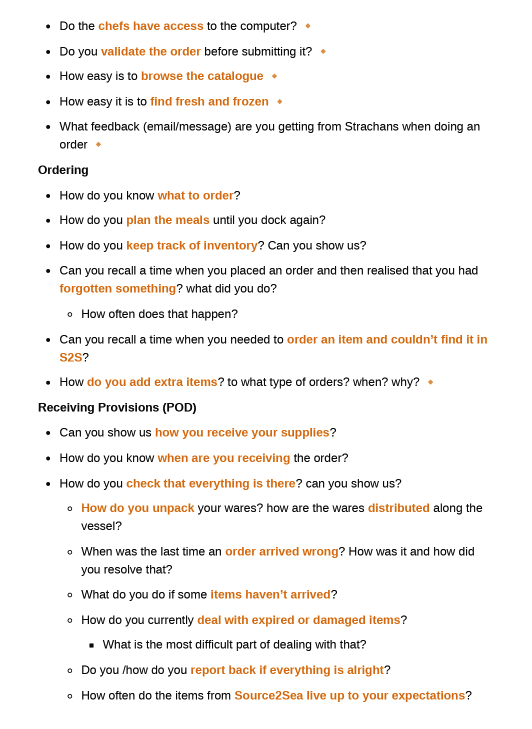
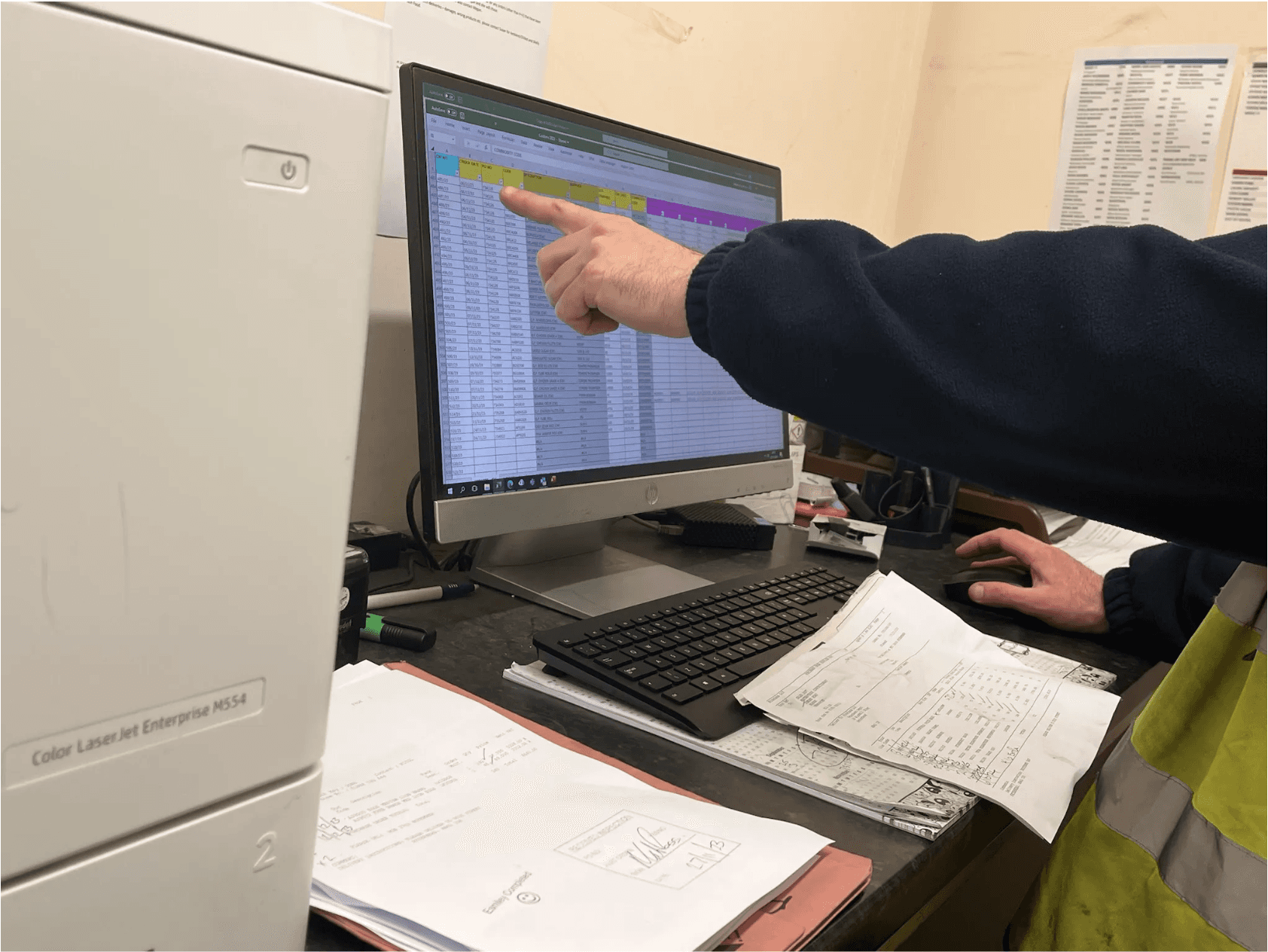
Once we arrived on site to the onshore supplier's office on a Monday morning, our first priority was to settle into the environment and observe quietly — without interference, as this is the busiest day of the week and allows us to capture things raw. We paid attention to everything: how colleagues communicated, their mood, what was on their screens, the layout of the workspace, the tools they used, even the notes casually left on desks. We called this silent observation — absorbing the unspoken details of how work really gets done.
From these observations, our questions naturally emerged.
What is this paper for? Why are you sorting them this way? Will someone else use these later? Why do you print that? How do you know what to do next?
These questions helped us move from simply seeing behaviors to understanding the motivations and constraints behind them. This stage was about uncovering the logic and emotion behind everyday decisions.
I always aim to return from research with as many insights as possible — not just for immediate use, but to build a lasting understanding of our users. With participants' permission, I document our sessions through notes, sketches, photos, and recordings, creating a rich reference library for the whole product team.
What we've learned
Field research with the Chief Steward of the vessel in Scotland revealed the complexity of provisioning at sea. What initially seems like a straightforward ordering process is actually a high-stakes balancing act involving timing, availability, weather, and cross-cultural crew needs.
Key Insights:
Special Orders Are the Norm, Not the Exception
“Sometimes I need a new type of candy or something specific for the Danish crew at Christmas — ones that are not in the system.” - Chef
Chefs frequently need to order non-catalog items. These aren’t edge cases — they’re expected. Yet current systems don’t support easy entry or prioritization of these requests, leading to workarounds and communication issues.
Delivery Timing Is a Moving Target
“We write in the order comments if we need the order at 7–9 AM, but there’s no guarantee — especially if we’re bunkering.” - Chef
Precise delivery timing is critical. Ship operations (like bunkering or docking) limit when supplies can actually be received. The system needs to allow flexible windows and flag time-sensitive items more clearly.
Communication Gaps Cause Errors and Rework
“Sometimes they just send the wrong stuff. Then I email back with the invoice and pictures — it takes time.” - Chef
The current reliance on manual email and invoice comparison for order verification is time-consuming and error-prone. There’s a clear opportunity to streamline issue reporting and item substitution workflows.
Inventory Is Still Managed Manually
“We use emails, printouts, and notes — but it’s hard to keep track, especially during bad weather.” - Chef
Despite having an ordering system, the Chef still relies heavily on paper and manual methods to keep track of what’s coming in. Weather disruptions, crew changes, and unpredictable conditions make reliable stock visibility essential.
Cultural and Crew Needs Add Extra Layers
“We’ve got 50 people — including technicians and stewards — all with different preferences. You’ve got to balance it.” - Chef
Provisioning isn’t just logistics — it’s tied to morale. Meeting dietary, cultural, and timing needs requires flexibility in both planning and system design.
Stock Visibility and Substitution Logic Are Critical
“Sometimes I ask for 10 yogurts and get 5 of a different kind. If I had known earlier, I could have planned around it.” - Chef
Both the Chef and the supplier described the stress and inefficiency caused by unclear substitution rules and late-stage changes. Substitutions happened after ordering and were confirmed over calls or emails, leading to confusion and reactive planning on the vessel.
Suppliers Face Challenges Managing Non-Contract Items
“We use miscellaneous codes to log non-stock items, but tracking those properly is a real pain. You can't search for them well, and there’s no flag for priority stuff.” - Supplier
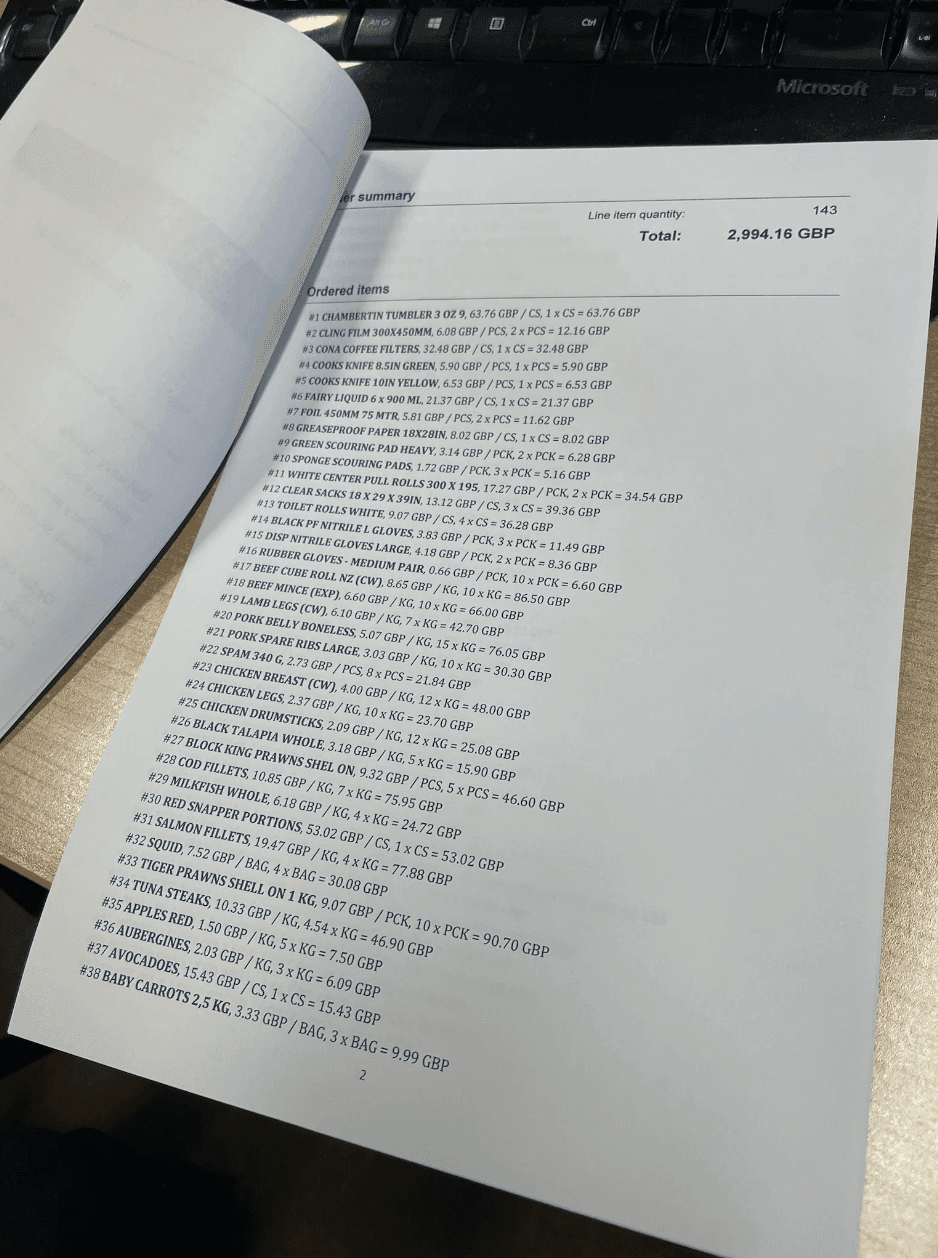
The supplier used a manual system with layered workarounds like yellow dots, miscellaneous codes, and spreadsheets to handle exceptions. Items like milk, cigarettes, or fresh produce — critical to vessel routines — had no prioritization in the e-shop experience, even though they required extra attention on the supplier side.
Communication Happens Outside the Product
“If there’s a delay or swap, we call the ship. Or someone emails us — we mark our initials and keep track manually.” - Supplier
Order management and communication were still heavily paper-based or reliant on email threads. The lack of an integrated messaging system meant both parties worked reactively, and errors or misunderstandings were often handled too late.
How This Research Informed the Product
Even though I wasn’t part of the design implementation, several opportunity areas emerged:
Flexible order editing: Allow chefs to add “special” items without breaking flow — and ensure those items are highlighted and tracked clearly.
Time-window delivery requests: Support delivery windows (e.g. 7–9 AM) instead of fixed timestamps — with notifications for suppliers.
Improved substitution workflow: Make it easy to flag, confirm, or reject supplier substitutions within the system.
Mobile/tablet-friendly inventory check-in: Help crews verify and check off deliveries directly at the point of receipt.
Cultural tag filters: Allow for saved or suggested bundles based on crew nationality or dietary patterns.
Searchable supplier item management: Add code/item search and tagging in the supplier portal to help manage non-contract or critical items like milk and cigarettes.
Clearer task traceability for rotating teams: Support rotating roles by logging actions and handovers, reducing reliance on initials or manual flags.
What This Taught Me About...
This project deepened my appreciation for service design and the hidden complexity in operational tools. It influenced how I approach multi-role systems and informed later projects in logistics and tooling.
Looking back, I’d advocate for earlier involvement in product discussions to help bridge research insights directly into design. This project also reinforced the value of cross-system thinking — understanding not just one interface, but how multiple tools interact across a service flow. Such specifically aimed product like this really needs to fit into very specific day-to-day operations and workflow of our users.